
Opening Plenary
Friday, October 23
8:30 – 10:00 a.m.
25 Years Later: Decoding the Resilience of 9/11
Speaker: Richard B. Garlock, P.E., Partner LERA Consulting Structural Engineers
While studying the failures of any major incident, it is also important to examine resilience from the point of view of structure, people, and time. From the bombing of 1993 to the attacks of 9/11, and the 25 years to follow, the World Trade Center and connected communities have demonstrated exceptional resilience. In this presentation, LERA Partner Richard Garlock will take you back to the WTC events that preceded 9/11, the events of that day, the rapid engineering response, and the years that followed. Mr. Garlock, who began his engineering career working on the structural repairs from the 1993 bombing, led efforts on behalf of LERA to support first responders, recovery efforts, and the collapse investigation following 9/11, and led the design of the new WTC Tower 4. He will provide first-hand accounts of the firm’s decades-long involvement with the WTC to answer the questions “What have we learned, how have we improved and what more is there to do?”.
 Richard B. Garlock, P.E. is a Partner at LERA Consulting Structural Engineers. With 33 years of experience designing efficient structural solutions to realize complex architectural visions, his expertise ranges from cultural facilities to academic and research buildings to high-rise office and residential towers, high-end retail and complex civic structures.
Rich is currently serving as the Partner-in-Charge/Project Director for a major addition and renovation to the Rock ‘N’ Roll Hall of Fame & Museum in Cleveland, OH; the Klein College of Media and Communication & The Center for Performing and Cinematic Arts at Temple University; Columbia University’s new Manhattanville Campus residential building; the Morgan Building Renovation & Addition at University of Pennsylvania; and a number of high-profile developments in New York City, Philadelphia, Miami and Virginia, with programs ranging from luxury residential towers to office and laboratory space. Rich previously served as the Project Director for multiple mixed-use towers in Malaysia, and for the design of 4 World Trade Center, which was the first building to open on the original WTC site in 2013. He was also a member of the WTC Recovery Team following the September 11th attacks, and participated in the investigation of the baseline performance of the WTC towers conducted by the National Institute of Standards and Technology. Rich participated in the WTC Insurance Litigation following the 911 attacks and assisted in the rebuilding of the WTC tower and below grade elements following the 1993 WTC attack.
His portfolio includes numerous high-profile projects, such as new office fit-outs for Spotify at 4 World Trade Center and for Hudson River Trading at both 3 & 4 World Trade Center; the new Nordstrom Flagship Store in Midtown Manhattan; 550/520 West 41st Street in Manhattan; the William J. Clinton Presidential Library & Museum; the Prada SoHo Renovation; and the Baltimore Convention Center Expansion. Other notable projects include the United Nations Consolidated Building; the Becton Dickinson Corporate Dining Facility; the New York Hall of Science Addition; and the Regional Justice Center in Las Vegas. In addition, he has worked on numerous supertall towers internationally, including Tradewinds Tower in Malaysia and the BDNI Center in Indonesia, and is currently working on a multi tower mixed use development in South Korea.
Since 2005, Rich has been a Visiting Lecturer for Princeton University’s Department of Civil and Environmental Engineering, and has a long and successful working relationship with the university encompassing many campus buildings, including the School of Architecture Renovation, Friend Center for Engineering, Butler College Residences and Lewis Center for the Arts. Since 2002, he is also a Structures Specialist for the State of New Jersey Office of Emergency Management and FEMA Urban Search & Rescue Team. Rich holds a Master of Science in Civil Engineering from Lehigh University and a Bachelor of Science in Civil Engineering from Syracuse University.
Lunch Plenary
Friday, October 23
12:15 - 2:00 p.m.
NIST’s Technical Findings of their NCST Investigation of Champlain Towers South
Speakers: Judith Mitrani-Reiser, Senior Research Scientist, NIST, Co-lead Investigator
Glenn R. Bell, Research Civil Engineer, NIST, Co-lead Investigator
The presentation will summarize the National Institute of Standards and Technology’s (NIST’s) National Construction Safety Team (NCST) technical findings on the causes of the June 24, 2021 partial collapse of the Champlain Towers South condominium in Surfside, Florida, which took the lives of 98 people.
Following an extensive technical investigation, the investigative team concluded that the collapse began in early June 2021, when two connections between garage columns and the pool deck failed in punching shear. These initial column failures caused cracks to grow and loads to redistribute in the pool deck over the next three weeks, resulting in the transfer of their loads to adjacent slab-column connections that were not strong enough to support them. This led to the larger catastrophic collapse on June 24. After the failure of the initial two columns, the failure spread to other elements of the pool deck and street-level parking structure, eventually unseating the southern edge of the pool deck slab from a supporting wall. This caused the slab to sag further and eventually break away at its northern edge from the face of the middle part of the tower. When the pool deck slab broke away, it damaged two connections supporting that part of the tower. The failure then progressed through the middle part of the tower, followed by the east part.
The presenters will describe the innovative, cross-disciplinary investigative approaches employed to determine the multiple causes and contributors to the initiation and progression of the failure.
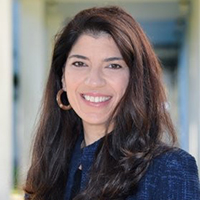 Dr. Judith Mitrani-Reiser is a Senior Research Scientist at the National Institute of Standards and Technology (NIST) and has dedicated her career to the reduction of losses from disasters and failures in our built environment.
Judy previously served as the Associate Chief of the Materials and Structural Systems Division and the Director of the Disaster & Failure Studies Program of the Engineering Laboratory at NIST. Before switching to a career in public service, she served on the faculty of the Departments of Civil Engineering and of Emergency Medicine at Johns Hopkins University. She has led research projects and transdisciplinary teams in multi-hazard impacts, community resilience, evacuation modeling, and performance of healthcare facilities. Judy currently leads NIST's National Construction Safety Team (NCST) investigation of the partial collapse of Champlain Towers South in Surfside, Florida. She also leads the mortality project of the NCST investigation of Hurricane Maria’s impacts on Puerto Rico. At NIST, she provides leadership for national hazards reduction programs, including the National Earthquake Hazards Reduction Program (NEHRP), and the National Windstorm Impact Reduction Program (NWIRP). Judy currently serves as a member of the Board of Directors of the International Association for Earthquake Engineering (IAEE), and on the Executive Committee of CROSS-US (Collaborative Reporting for Safer Structures – US). She previously served as the Vice President of the Earthquake Engineering Research Institute (EERI) in 2021, on EERI’s Board of Directors from 2018 to 2021, and was honored as the 2023 EERI Distinguished Lecturer.
Judy is a member of the American Society of Civil Engineers (ASCE), where she co-founded SEI’s Committee on Multi-Hazard Mitigation. She was inducted into the Academy of Distinguished Alumni at the University of California, Berkeley in 2021, and has received several NIST awards for her mentorship, dedication to a safe working environment, and her advocacy for diversity, equity, and inclusion in the workplace. Judy received her Ph.D. in Applied Mechanics from the California Institute of Technology (Caltech) in 2007, M.S. in Structural Engineering, Mechanics, and Materials from the University of California, Berkeley in 2001, and B.S. in Civil and Coastal Engineering from the University of Florida in 2000.
 Glenn Bell joined NIST in 2021 to lead the NCST Investigation of the Champlain Towers South collapse. From 1975 to 2020 he was employed at Simpson Gumpertz & Heger (SGH), were he worked in structural design, structural rehabilitation, and the investigation of failures. He investigated the walkways collapse at the Hyatt Regency Hotel, Kansas City, the scaffold collapse at the John Hancock Center, Chicago, served on SGH’s team that conducted analyses for NIST’s NCST investigation of WTC Towers 1 and 2 after 9/11, and evaluated the effects of alkali-silica reaction in the concrete of the Seabrook Station Nuclear Power Plant.
His structural design projects include SpaceShip Earth at Walt Disney World Epcot Center and the Aga Khan Medical Complex in Karachi, Pakistan. Glenn served as SGH’s CEO from 1995 through 2016, a period of major growth in size, expertise, and reputation of the firm. Glenn’s professional passion is structural safety, especially in investigating failures and employing the lessons learned from them to improve practice and avert future disasters.
He co-founded the American Society of Civil Engineer’s (ASCE) Technical Council on Forensic Engineering and was the principal driver in establishing Collaborative Reporting for Safer Structures – US, where he currently serves as Director. He authored the chapter Engineering Investigation of Failures in the Forensic Structural Engineering Handbook (McGraw-Hill, 2000). Glenn is the Past-President of the Structural Engineering Institute of ASCE and is a Board Member of the Charles Pankow Foundation. Glenn earned a B.S. degree in Civil Engineering from Tufts University and an M.S. in Structural Engineering and Structural Mechanics from the University of California at Berkeley.
He is a registered PE in six states and in the District of Columbia. He is a registered Structural Engineer in Illinois and a Chartered Engineer in the UK. He has received numerous recognitions for his contributions, including ASCE’s 2012 Forensic Engineering Award, election as a Distinguished Member of ASCE in 2021, election to the National Academy of Engineers in 2024, recipient of the 2025 Gold Medal from the Institution of Structural Engineers, and invited as the Blume Distinguished Lecturer at Stanford University in 2026.
Lunch Plenary (part of awards lunch)
Saturday, October 24
1:00 - 1:45 p.m.
A.I. in Forensic Engineering: Managing Risks and Leveraging Efficiency
Hear from an expert attorney on how AI is impacting the forensic engineering industry, and how it effects liability, responsibility, Data standards and risks. Speaker: Emily C. Sheets, Attorney of Counsel, CSVL
Emily Sheets is Of Counsel in CSVL’s Charleston office where she practices in the firm’s construction law sector as a litigator and general counsel. Over the course of her 17-year legal career Emily has managed complex litigation cases through trial and has extensive experience helping corporations establish risk management strategies that limit liability and promote growth.
Closing Plenary
Sunday, October 25
8:00 – 9:00 a.m.
Spaceship Earth: From Imagination to Engineering
Speakers: Glenn R. Bell, Research Civil Engineer, NIST, Co-lead Investigator
Completed in 1982, Spaceship Earth at EPCOT has become one of the world's most recognizable structures. Its distinctive geodesic sphere presented unusual challenges in structural engineering, building enclosure design, and construction. Join us for a behind-the-scenes look at the engineering and construction of this landmark structure as Glenn Bell walks us through this signature project from his early career, drawing on his firsthand experience in its original design and construction.